

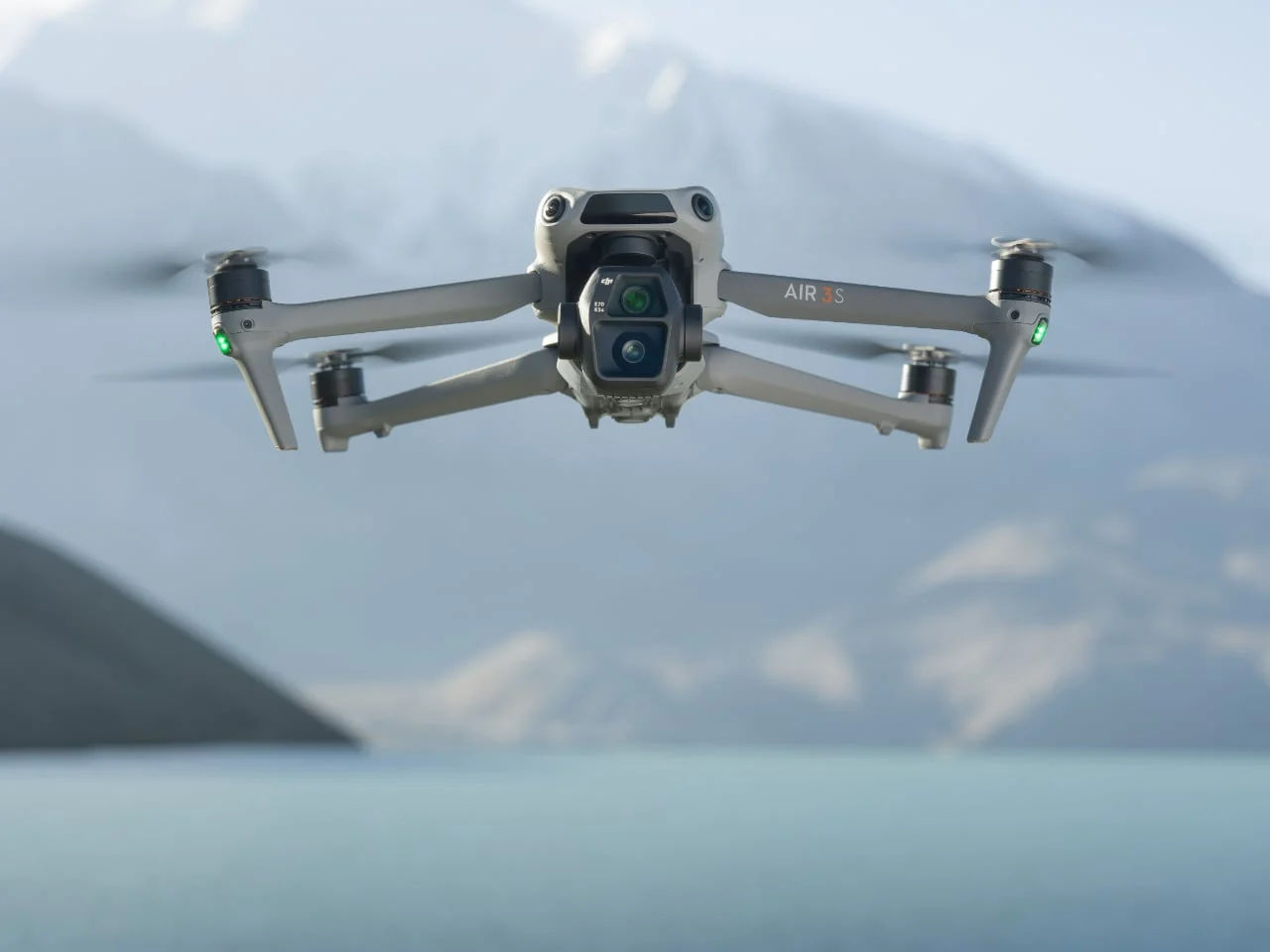
Clean aerial footage used to demand a pilot, a camera operator, a heavy budget, and nerves of steel. Now, DJI drone technology has moved much of that burden into smaller aircraft, better sensors, smarter controllers, and software that keeps a nervous hand from ruining the shot. That matters for U.S. real estate agents, wedding filmmakers, roof inspectors, travel creators, and local business owners who need professional aerial shots without renting a full crew. DJI’s own camera-drone lineup now spans small creator models, FPV options, and flagship camera aircraft, while its Mavic 4 Pro page highlights a triple-lens system, a 100MP Hasselblad main camera, 6K/60fps HDR video, 360° gimbal rotation, and longer-range video transmission. For creators trying to build strong local brand visibility, the shift is simple: aerial photography has moved from “special project” to weekly content tool. The camera still needs taste behind it. The difference is that the machine now forgives more human mistakes.
Why DJI Drone Technology Changed the Starting Line for Creators
The old barrier was not flight alone. It was coordination. Someone had to hold a moving camera in the air, keep the aircraft safe, read light, frame the subject, and land before the battery punished poor planning. The new starting line is lower because flight control and image control now work together. A beginner can get a usable shot earlier, while a skilled pilot can spend more attention on story. That shift matters because most small clients do not need a Hollywood shot. They need a clean, steady, believable view that helps people understand a place. The best modern drone work often looks calm, not flashy.
Why stable motion matters more than raw altitude
Many new pilots think aerial photography becomes special the moment the drone rises. That is the first trap. Height gives you novelty for ten seconds. Stable motion gives you a shot someone can use in an ad, listing video, event recap, or YouTube opening.
A smooth push over a suburban cul-de-sac can say more about a home than a fast climb to 300 feet. The viewer wants to feel the driveway, the tree line, the pool shape, and the space between houses. If the drone jerks, the brain stops watching the property and starts noticing the pilot. The same problem shows up in event work. A rough move over a high school football field feels like a gadget test, while a slow drift toward the scoreboard can feel like a memory.
This is where modern flight control earns its keep. GPS hold, gimbal correction, subject tracking, and brake behavior turn shaky hands into slower hands. The non-obvious win is not that the drone flies itself. It is that it slows the pilot down. That pause lets you see the frame before you chase the next move. Better control also makes editing easier because each clip has a beginning, middle, and end instead of a nervous wobble that needs to be hidden.
How smart tracking turns a solo shoot into a small crew
A solo creator used to face an awkward choice: fly the drone or direct the action. You could follow a cyclist, a bride and groom, or a contractor walking a job site, but you had to split your attention. That split caused late pans, crooked horizons, and missed moments. It also made simple shoots feel larger than they were. One person could carry the gear, yet the work still felt built for a team.
Tracking features changed that rhythm. They do not replace judgment, but they can hold a subject long enough for you to think about timing. DJI lists features across its camera-drone line such as omnidirectional obstacle sensing, ActiveTrack 360°, 4K/60fps HDR video, and long-distance video transmission on models aimed at creators rather than film studios. Those features matter most when the subject is moving at human speed. Walking, biking, paddling, and touring a property all fit the sweet spot.
A Denver real estate agent filming a mountain-view listing, for example, can walk the lot while the drone keeps the house and foothills in the same visual idea. The shot feels planned, even when the team is one person with a controller. The trick is to avoid letting tracking become a gimmick. Use it for movement with meaning, not motion for its own sake. If the subject is not telling the viewer something, the tracking shot is only a moving postcard.
Camera Systems That Make Aerial Photography Feel Familiar
The camera side may be the bigger shift. A drone is no longer only a flying wide-angle camera. It can now behave more like a compact production kit, with different focal lengths, better dynamic range, and shooting modes that match how people already frame on the ground. That makes aerial photography less alien for creators who understand phones, mirrorless cameras, or real estate photography. It also changes client expectations. A buyer or business owner may not know sensor size, but they can feel when a shot has depth, color, and intention.
Why multi-lens drones changed location scouting
A wide aerial shot is useful, but it can flatten the world. Every roof, road, and parking lot starts to look the same from too far away. Multi-lens drones help because they let you compress distance, isolate a subject, or show layers in a scene without flying closer than the job allows. That matters in crowded U.S. neighborhoods, where flying nearer is not always wise, legal, or respectful.
Think about a small hotel near Lake Tahoe. A wide lens can show the roof, parking lot, and lake access. A medium telephoto view can pull the lake closer behind the building and make the location feel more honest than a map pin. A tighter angle can show guests walking from the lobby toward the water. Same property. Three meanings. For a listing, that can be the difference between “nice building” and “I understand why this location costs more.”
That is why drone cinematography has become more useful for local campaigns. The strongest shot is not always the widest one. Sometimes the more saleable image is the one that makes distance readable. DJI’s newer flagship language points toward that idea, with the Mavic 4 Pro promoted as a triple-lens camera drone rather than a simple flying camera. The hidden benefit is scouting speed. You can test visual relationships in minutes instead of walking half the property with a ground camera.
How low-light and HDR tools save imperfect shooting days
Small teams rarely get perfect light. The wedding schedule runs late. The construction crew pours concrete before sunrise. The restaurant wants a rooftop patio shot at dusk because that is when the place feels alive. Older drones made these moments risky because small sensors punished shadows and bright skies. A creator had to choose between a blown-out sky or a dark subject, and neither choice made the client happy.
Better HDR video and larger camera sensors do not make bad light disappear. They give the editor more room before the image falls apart. A sunset roofline can hold sky color while keeping the building from becoming a black shape. A moving car in a dealership lot can keep detail in white paint under harsh Florida sun. In practical terms, the camera gives you more usable minutes at the edges of the day.
The counterintuitive lesson is that better image tools should make you shoot less, not more. When you know the camera can hold a careful exposure, you stop spraying clips and start waiting for the right ten seconds. For anyone building a drone video editing workflow, that discipline saves more time than another battery. It also protects the tone of the final video because the editor is choosing from stronger moments, not rescuing weak ones.
Safety, Rules, and Confidence for U.S. Drone Creators
Better drones can make flying feel casual. That is helpful until it becomes careless. In the United States, the practical creator has to think like a pilot even when the job feels like content work. The machine may be friendly, but the airspace is shared, and the rules are not optional. This is the place where many good creators get uneasy, and that is not a bad sign. A little caution keeps the work professional.
What new pilots should know before flying for money
The clean line is this: if you fly for business, payment, promotion, or client work in the United States, you need to understand Part 107. The FAA says pilots operating under the Small UAS Rule must obtain a Remote Pilot Certificate, which shows they know drone rules, operating requirements, and safe procedures. That certificate does not make someone a great visual storyteller. It does show they have taken the airspace side of the job seriously.
That matters for a realtor in Phoenix, a wedding shooter in Nashville, or a roofing company in Ohio. A short aerial clip used in a paid listing, website banner, insurance report, or social ad is not the same as flying for fun in a park. The money does not have to come from selling the clip alone. The business purpose is enough to change the responsibility. This catches people by surprise because the drone may be the same one they fly on weekends.
Remote ID also belongs in the plan. FAA guidance explains that recreational pilots may register once and list the serial numbers of Standard Remote ID drones or modules in their inventory, while Part 107 pilots must register each device separately. Before a U.S. creator thinks about paid flights, the FAA Remote ID guidance is worth reading in full. Rules can feel dull beside camera specs, but they decide whether the footage can be used with confidence.
Why obstacle sensing is a creative tool, not only a safety net
Obstacle sensing is often sold as protection. It is that, but the creative value is quieter. When a drone can better read its surroundings, the pilot can attempt slower, closer, more controlled moves near trees, buildings, signs, and parked vehicles without treating every shot like a stunt. The frame can come closer to the place people recognize from the ground.
A restaurant patio video shows this well. The best clip may be a low move past string lights, tables, planters, and a front sign. That is not a high-risk action scene. It is a tight space with expensive objects and people nearby. Safety sensors help, but the pilot still needs a route, a spotter when needed, and the discipline to cancel the move if the space feels wrong. A cancelled shot is cheaper than a damaged drone, a scared guest, or a call from the property manager.
Here is the non-obvious part: safer drones can tempt people into worse decisions. Confidence should lower stress, not raise risk. The best pilots use sensors like seat belts. They are glad to have them, but they do not drive into traffic to test the strap. Good judgment still beats any automated warning.
How Small Teams Turn Drone Cinematography Into Everyday Work
The biggest change is not that Hollywood-style shots are cheaper. It is that useful aerial clips now fit into normal workdays. A small team can shoot a storefront, an acreage listing, a church renovation, a sports camp, or a roofing inspection without turning the task into a major production. That changes how often aerial footage can appear in local marketing. It also changes who gets to use it. The tool is no longer reserved for brands with annual media budgets.
Where real estate, tourism, and local brands gain the most
Real estate gets the obvious win. A drone can show lot shape, nearby roads, tree cover, roof condition, and neighborhood spacing in a way ground photos cannot. For rural listings in Texas or cabin rentals in Colorado, the aerial view may answer the buyer’s first question before they read a word. That saves time because the viewer can qualify the property faster.
Tourism and local services gain in a different way. A kayak rental business can show the bend in the river. A golf course can show how water guards the green. A landscaping company can show before-and-after scale from the same path at the same height. These are not vanity clips. They reduce doubt. They also help small operators show context that a phone camera at eye level cannot reach.
Drone cinematography works best when it solves a viewer question. Where is this place? How big is it? What is nearby? Can I picture myself there? A smart small business video marketing guide should treat aerial footage as proof, not decoration. That mindset keeps the drone from stealing attention from the business it is supposed to support.
How to plan shots without making every video look the same
The danger of accessible gear is sameness. Everyone discovers the same reveal, the same straight-down roof shot, the same rising pullback. After a while, professional aerial shots can feel oddly flat because every creator is repeating the camera move the drone makes easiest. Viewers may not know the name of the move, but they know they have seen it.
Start with the job, not the feature list. A home listing may need a slow orbit, but a farm equipment dealer may need a tracking pass beside a moving tractor. A school campus may need a calm route from entrance to athletic fields. A coffee shop may need one short overhead shot to show the patio, then ground footage to carry the warmth. The drone should answer a question the ground camera cannot.
The better habit is to write a five-shot plan before charging batteries. Choose one establishing shot, one movement shot, one detail from above, one transition, and one safety backup. That plan keeps the drone from becoming the whole video. Strange as it sounds, the best aerial work often knows when to return to the ground. Aerial restraint is one mark of a creator who has moved past the toy phase.
Conclusion
The appeal of modern DJI drones is not only sharper footage or easier flight. It is the way they let more people think visually from the air without treating every project like a film set. A local creator can now capture a roofline, a shoreline, a backyard, or a storefront with fewer crew needs and more control than the market allowed a decade ago. DJI drone technology is valuable because it brings the hard parts closer to the surface: timing, taste, safety, and story. Those parts still belong to the person holding the controller. The drone can steady the move, track the subject, and protect the route, but it cannot decide what the viewer should feel. That is the work, and it takes more discipline than most new pilots expect. Start with a purpose, fly inside the rules, and use the aerial view only when it adds truth to the scene. The future belongs to pilots who treat the sky as a viewpoint, not a shortcut.
Frequently Asked Questions
How much does a DJI drone help beginners capture better aerial video?
A beginner gets the most help from stabilization, GPS hold, subject tracking, and camera presets. These features reduce common mistakes like drifting, tilted horizons, and rough movement. Skill still matters, but the first usable clips arrive faster than they did with older aircraft.
Is a DJI Mini drone enough for professional aerial shots?
Yes, for many daylight jobs like real estate previews, travel clips, social videos, and small business promos. A Mini model may not replace a larger cinema drone in demanding light, wind, or lens needs, but it can produce clean work when flown with care.
Do I need a Part 107 license to sell drone footage in the USA?
Yes, if the flight is for business, client work, promotion, or compensation, Part 107 rules apply. The FAA requires a Remote Pilot Certificate for Small UAS Rule operations, so do not treat paid drone work like a hobby flight.
What drone features matter most for aerial photography?
Camera sensor quality, gimbal stability, battery life, wind handling, obstacle sensing, and lens options matter most. Tracking modes help too, but they should support a planned shot. A strong image starts with light, framing, and purpose.
Why do DJI drones make drone cinematography easier for small teams?
They combine flight control, stabilized cameras, tracking, and safety alerts in compact aircraft. That lets one or two people capture shots that once needed more crew. The time saved on setup often matters as much as the footage itself.
Are obstacle sensors enough to prevent drone crashes?
No. Sensors reduce risk, but they cannot read every branch, wire, reflective surface, bird, or pilot mistake. Good pilots still scout the path, keep visual line of sight, watch weather, and leave space around people and property.
What is the best way to plan a drone video shoot?
Start with the story the viewer needs to understand. Then pick a few shots that answer that need: location, scale, movement, and detail. Charge extra batteries, check airspace, set return-to-home height, and avoid flying without a route.
Can small businesses use drone footage without making it look overproduced?
Yes. Keep clips short, grounded, and tied to a clear point. A bakery may need one patio reveal, not a sweeping skyline. A contractor may need roof progress, not dramatic spins. Simple footage often feels more trustworthy.