

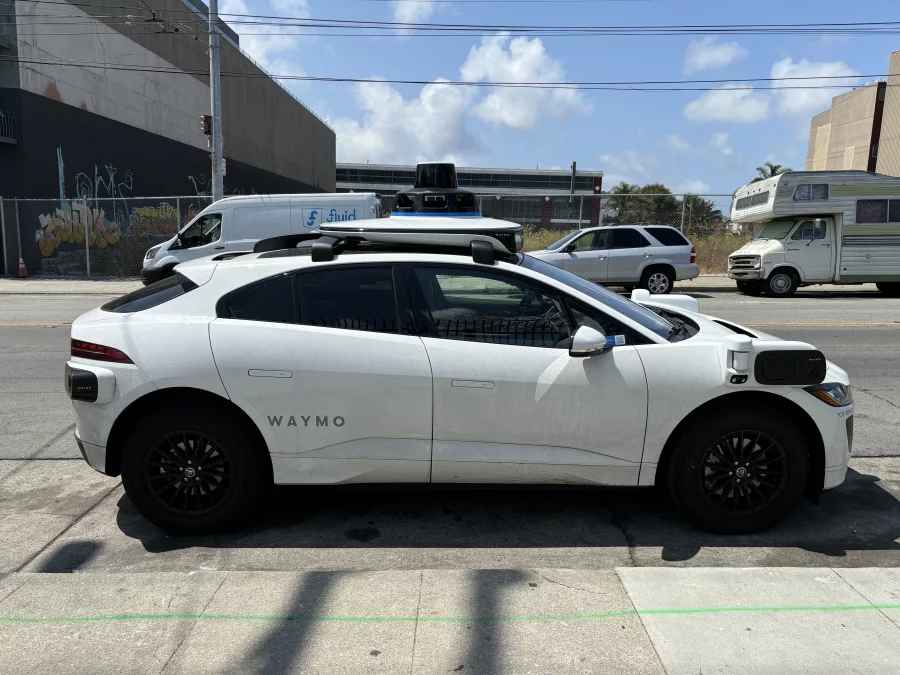
The first few seconds inside a driverless car are stranger than the ride itself. That empty front seat carries more emotional weight than the moving steering wheel, which is why Waymo Robotaxi Expansion matters to Americans who are curious but cautious. People are not only asking where the cars operate. They want to know whether autonomous rides feel safe, awkward, smooth, private, confusing, or worth choosing over a normal ride-hail trip. The answer depends on the city, the street, the pickup spot, and your own tolerance for silence. For readers who follow modern mobility reporting, the bigger story is not a sci-fi takeover. It is a slow public test of trust, one paid trip at a time, from Phoenix and San Francisco to Los Angeles, Austin, Atlanta, Miami, Orlando, Nashville, and the next wave of U.S. markets. A driverless taxi service can feel calm when the route is familiar, yet tense when construction cones, double-parked vans, or airport traffic enter the scene. That mix is the truth.
Waymo Robotaxi Expansion Is Happening City by City, Not All at Once
Waymo’s growth looks fast from the outside, but the pattern is careful. The company does not flip a national switch and send cars into every downtown at once. It enters mapped areas, studies local driving habits, works through permits and local response plans, then widens access when the service can handle the city’s rhythm. That city-by-city approach can frustrate people waiting in Chicago, Boston, Seattle, or Las Vegas, yet it is the reason the service feels more normal in places where it already runs. Streets have accents. A left turn in Phoenix is not the same social act as a left turn in San Francisco. Even the local version of “normal” has to be learned block by block.
Why city rollout matters more than the car itself
Most riders notice the vehicle first. They see the white Jaguar I-Pace, the spinning sensor dome, and the empty driver seat. That is natural. The harder part is less visible: the operating zone. A driverless taxi service depends on a defined area where the vehicle has been trained, tested, and watched under local conditions. The zone is the promise and the limit at the same time. Outside it, the brand may be famous, but the ride is not available.
Phoenix gave Waymo wide suburban roads, heat, and broad lanes. San Francisco added hills, cyclists, tourists, delivery trucks, fog, and odd intersections that make even skilled drivers mutter. Los Angeles brought wide boulevards, dense nightlife zones, and curbside chaos. Miami and Orlando add rain, visitors, hotel corridors, and trips that may start with someone who has never used the app before. Each place forces the system to learn a different kind of street manners.
The non-obvious insight is that expansion is less about geography than repetition. A city becomes easier after the system has seen the same weird corner thousands of times. The car does not need human memory, but the service needs local pattern memory. That is why a map boundary can be more meaningful than a state line. The boundary tells you where the company believes the service can act with enough consistency to charge for the ride.
How the newest cities change the rider expectation
New cities shift the story from novelty to usefulness. In Nashville, for example, the first service area touches the places where people move between music venues, restaurants, hotels, and neighborhoods. That makes the service feel less like a tech demo and more like a late-night ride choice after a show on Broadway. A visitor may care less about sensors than about getting from Midtown to East Nashville without fuss.
Florida changes the mood again. In Miami, a ride may include visitors moving from Coral Gables toward Wynwood or Miami Beach. In Orlando, the use case can feel tied to tourists, workers, and locals crossing busy commercial corridors. The rider is not always a tech fan. Sometimes it is a family that wants a quiet ride back from dinner, or a conference attendee who wants one less small decision after a long day.
The next layer is how these launches teach riders what autonomous rides can and cannot be. They are not magic carpets. They are app-based transportation inside set areas, with remote support and a rule-following driving style. The service earns repeat use when it stops feeling like an event. Boring is a victory here. When a rider forgets to film the steering wheel, the market has moved.
What It Feels Like When No One Is Driving
The first ride can feel like a small social mistake. You enter the back seat, shut the door, and wait for a person who will never turn around. Then the screen asks you to start the trip. The car signals, pulls away, and the wheel moves by itself. After two minutes, the shock fades. After ten, you may be checking your phone like any other ride. That emotional drop is the hidden product: the machine has to become ordinary before people will use it twice. The ride is selling a feeling as much as a route, and the feeling must shift from spectacle to relief.
The first mile feels like trust being negotiated
The first mile is where most riders judge the whole thing. You listen for harsh braking. You watch how the car handles a pedestrian near the curb. You notice whether it creeps too much at stop signs or waits longer than a local driver would. None of this is technical to the passenger. It is bodily. Your shoulders decide before your brain writes a review.
A common surprise is how conservative the ride can feel. Human drivers often fill traffic gaps with confidence, impatience, or local nerve. A Waymo tends to make choices that feel measured. That can be comforting on a wide road and slightly annoying when you are late. You may find yourself wanting the car to “go already,” then remembering that the lack of ego is part of the deal. The car is not trying to win the intersection. It is trying to clear it without drama.
This is where self-driving cars challenge a habit Americans rarely admit: many of us confuse assertive driving with good driving. A machine that refuses to bully its way through traffic can feel hesitant, even when it is doing the safer thing. After a few rides, that hesitation may start to read as politeness. Or it may still irritate you. Both reactions are fair.
Silence changes the whole passenger experience
A normal ride-hail trip carries social weather. Maybe the driver talks too much. Maybe the car smells like fast food. Maybe you feel awkward taking a work call because a stranger is inches away. A driverless cabin removes that layer. You get privacy without owning the car. For many riders, that is not a small perk. It changes how the trip is used.
That privacy can feel freeing. A parent can buckle a child without rushing through small talk. A business traveler can read notes before a meeting. A college student can ride home without managing a conversation. For some riders, especially women traveling alone at night, the absence of a human driver may feel safer in a personal way that crash charts cannot measure. The safety feeling is social as much as mechanical.
Yet silence has its own edge. When the car pauses longer than expected, there is no driver to explain, “Construction ahead,” or “This turn is tricky.” The screen becomes the voice of the trip. That is why rider interface design matters. Clear screens, simple controls, and easy support access can turn a strange pause into a manageable moment. The less the rider has to guess, the more the car earns trust.
Safety, Street Reality, and the Limits Riders Should Understand
Trust in autonomous rides should not come from hype. It should come from understanding the lane these vehicles are operating in. Waymo is not selling you a car to own and sleep in while it drives anywhere in America. It is offering paid rides in selected areas under selected conditions. That distinction matters. The NHTSA automated vehicle safety guidance also makes a clear point for U.S. consumers: there is no fully automated vehicle you can buy today that removes your responsibility as a private driver. A service ride and a car in your driveway are different legal and practical realities.
Safety data needs context, not cheerleading
Waymo publishes safety impact data and says its rider-only miles compare favorably against human driving benchmarks in the places it operates. That matters, but smart readers should ask what the comparison covers. Surface streets, operating zones, vehicle types, and local road conditions all shape the meaning of a safety claim. A number without its setting can make the story look cleaner than the road.
A Phoenix surface-street trip is not the same as a snowy Detroit commute. A downtown Los Angeles ride is not the same as a rural highway at night. The fair question is not “Are robots safer than humans everywhere?” The fair question is “How does this system perform inside the exact conditions where it is allowed to operate?” That question sounds less dramatic, but it is more useful for riders and city officials.
The counterintuitive part is that limits can build trust. A service that says no to certain roads, weather, or pickup points may be safer than one that tries to appear fearless. Adults trust boundaries when the boundaries make sense. A car that avoids a road because the system is not ready is not failing the future. It may be respecting it.
Edge cases are where public patience gets tested
The moments that shape public opinion are rarely smooth trips. They are construction zones, emergency vehicles, flooded roads, odd cones, blocked lanes, and human drivers doing illegal things. A robotaxi can be excellent for 99 calm blocks and still be judged by the one intersection where it looks confused. That is how public trust works on streets. People remember the blockage.
That judgment is not unfair. Streets are public space. If autonomous vehicles share roads with cyclists, school buses, ambulances, and pedestrians, the standard must be high. A rider may forgive a cautious pause. A city may not forgive a pattern that blocks traffic or mishandles a closure. The service has to satisfy passengers and neighbors who never opened the app.
This is also why future transportation trends should be discussed with less theater and more street-level detail. The hard work is not making the steering wheel turn. The hard work is dealing with the messy human layer around the car. A patient system can still annoy people. A polite system can still need better judgment in rare moments. Progress in this field looks less like a launch party and more like fewer awkward minutes at the curb.
How to Decide Whether a Waymo Ride Makes Sense for You
The best use of Waymo today is not every trip. It is the right trip. Think short to mid-length city rides, areas with steady service coverage, and moments when privacy, predictability, or curiosity matters more than door-to-door flexibility. You may love it for a quiet ride to dinner and still pick a human driver for a tight airport run with heavy luggage. That is not a contradiction. It is how new transport becomes part of real life. Americans rarely adopt transportation because it sounds futuristic; they adopt it when it solves a plain problem without adding a new one.
Match the trip to the service area
Before booking, check the app coverage and pickup rules. Autonomous rides work best when the pickup spot is clean, legal, and easy for the vehicle to reach. A hotel entrance may be simple. A crowded curb outside a stadium after a concert may not be. That difference can decide whether the trip feels smooth or clumsy.
In cities like San Francisco and Los Angeles, the biggest issue may be curb behavior. People step out between parked cars. Delivery drivers block lanes. Scooters appear from blind spots. In Miami or Orlando, visitors may treat the car like an attraction and crowd around it. The ride can still work, but your pickup choice matters. The app can plan the route, but you still choose the starting scene.
A practical rule helps: choose the boring curb. Walk half a block away from the chaos if the app allows it. That small choice can make the whole trip calmer. It also changes your first impression. A clean pickup makes the vehicle look smarter because it has fewer human surprises to sort through.
Know when a human driver may still be better
A driverless taxi service is not always the best answer. A human driver can improvise around a sudden hotel driveway change, help with bags, read a confusing apartment entrance, or call you when the pickup point is wrong. Those human touches still matter. Anyone who has dragged luggage through a busy airport lane understands this within seconds.
Self-driving cars also have a different relationship with time. They may follow rules that a human driver bends. They may avoid routes that look faster to you. They may stop for situations you would wave through. If you are late for a flight, that difference can feel larger than the fare. The calmer choice is not always the fastest choice.
Still, the calm has value. For a solo rider going home from a restaurant, a person taking a private phone call, or an older adult who wants predictable transport without asking family for help, the trade can make sense. That is where electric vehicle and mobility guides connect with real life. The best technology is not the loudest. It is the one that fits a normal Tuesday.
Conclusion
The future of ride-hailing will not arrive as one dramatic moment. It will arrive through ordinary trips that people either repeat or avoid. Waymo has made the strongest case so far by treating each city as its own road culture, not as a blank square on a national map. That approach is slower than hype wants, but it is better suited to American streets. Waymo Robotaxi Expansion is worth watching because it tests more than software. It tests whether riders can trust a vehicle that follows rules without social cues, and whether cities can accept a new kind of road user without losing patience. The ride itself may feel calmer than expected, then odd again at the next strange intersection. That tension is honest. For now, the smartest response is neither blind faith nor lazy doubt. Treat the ride as a practical tool with limits, not a prophecy about every road in America. Try one when the route is low pressure, the service area is strong, and you have room to observe the experience with clear eyes.
Frequently Asked Questions
What cities have Waymo rides available now?
Availability changes by market and access level, but public service has operated in major U.S. areas such as Phoenix, San Francisco, Los Angeles, Austin, Atlanta, Miami, Orlando, and Nashville. Always check the Waymo app for your exact pickup zone before planning a trip.
Are autonomous rides safer than regular ride-hailing?
They can be safer in the conditions where the system has been approved to operate, but the answer is not universal. Safety depends on the city, route, weather, road type, and how the vehicle handles unusual street events.
How does a Waymo ride feel the first time?
It often feels strange for the first few minutes because the driver seat is empty and the wheel moves on its own. Most riders settle in once the car handles normal turns, signals, stops, and lane changes in a calm way.
Can I talk to someone during a driverless taxi ride?
Support options are built into the ride experience, usually through the in-car screen or app. You do not chat with a driver, but you are not left without help if the trip needs support or the car must stop.
Is Waymo better for tourists or locals?
Both can benefit, but for different reasons. Tourists may like the novelty and simple app flow, while locals may value repeat trips, privacy, and predictable routes once they know where pickup and drop-off work well.
Do Waymo cars drive on highways?
Highway access depends on the city, current operating rules, and service updates. Some markets have introduced or tested highway trips, but riders should not assume every route will include freeway driving.
What happens if the car gets confused?
The vehicle may slow, pause, reroute, or contact support depending on the situation. Most pauses are minor, but construction, blocked lanes, emergency scenes, and unusual curb activity can make the ride feel less smooth.
Should I choose Waymo over Uber or Lyft?
Choose it when privacy, curiosity, and a calm rule-following ride matter. Pick a human driver when you need help with luggage, flexible pickup judgment, personal communication, or faster improvisation around a messy location.